

Pain Near the Tailbone

Swelling Around the Buttock Cleft
Pus or Blood Discharge
Redness and Tenderness
Bad-Smelling Drainage
Fever (During Infection)
Pain While Sitting
Recurrent Abscess Formation
Ingrown Hair
Prolonged Sitting
Excess Body Hair
Obesity
Poor Hygiene
Repeated Friction in the Buttock Area
Family History
Young Adult Age Group

Clinical Evaluation
Evaluation for Abscess Formation
Assessment of Sinus Openings
Ultrasound (When Required)
Conservative Management
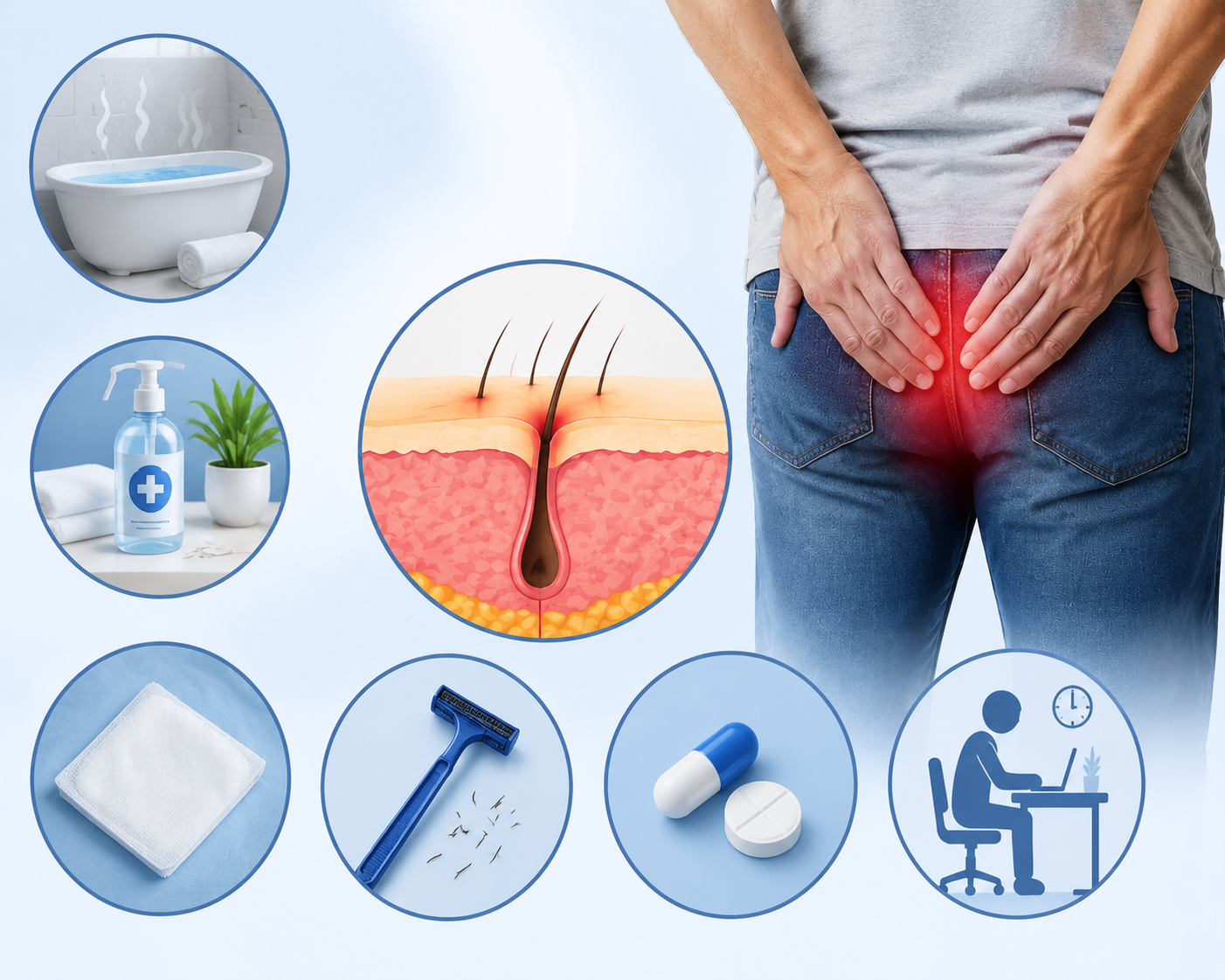
In the early stages or after treatment, maintaining proper hygiene, regular hair removal around the affected area, weight management, and avoiding prolonged sitting can help reduce the risk of recurrence.
Abscess Drainage
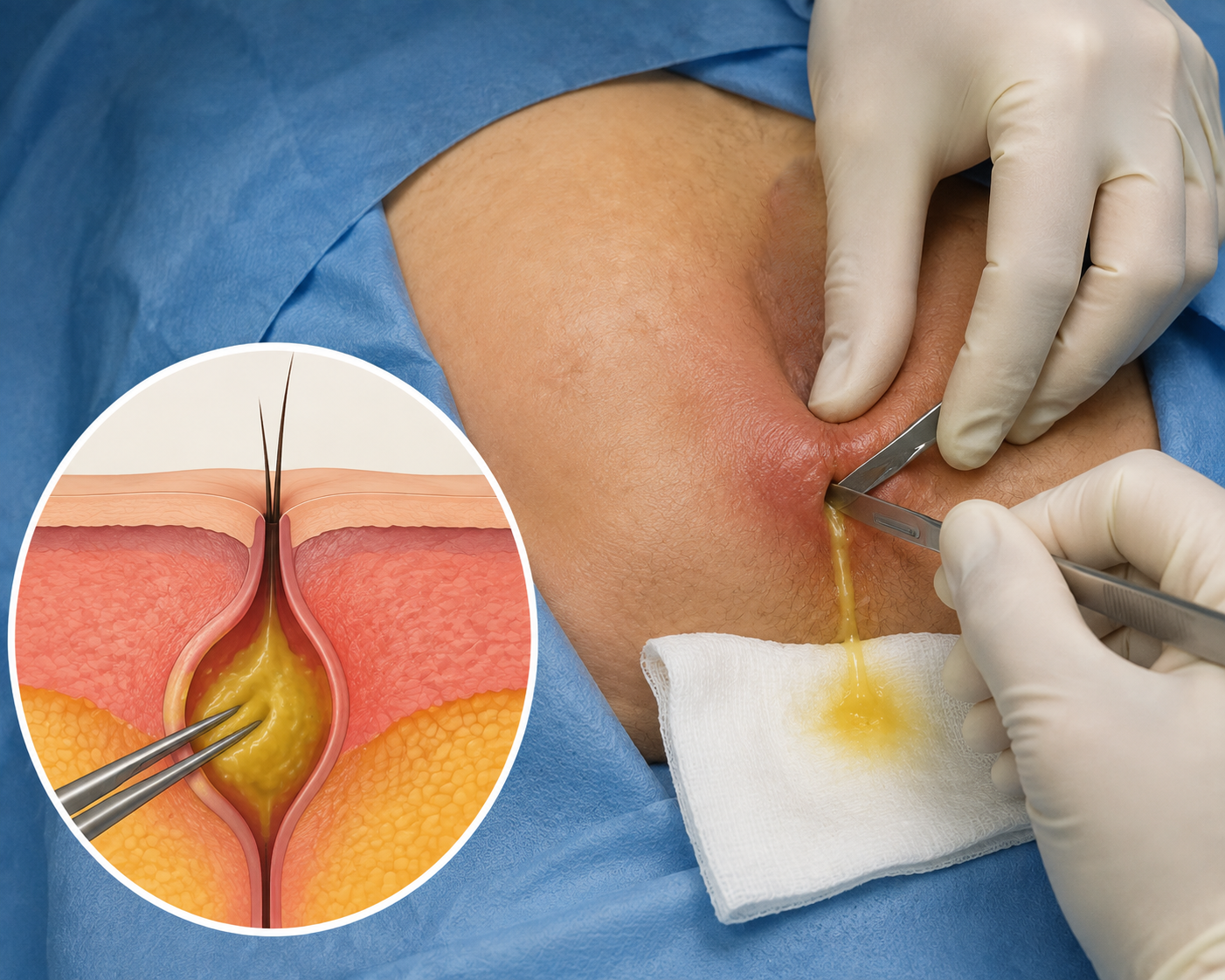
If a pilonidal abscess is present, prompt incision and drainage are performed to relieve pain, remove infected pus, and control the infection before definitive treatment.
Minimally Invasive Pilonidal Sinus Surgery
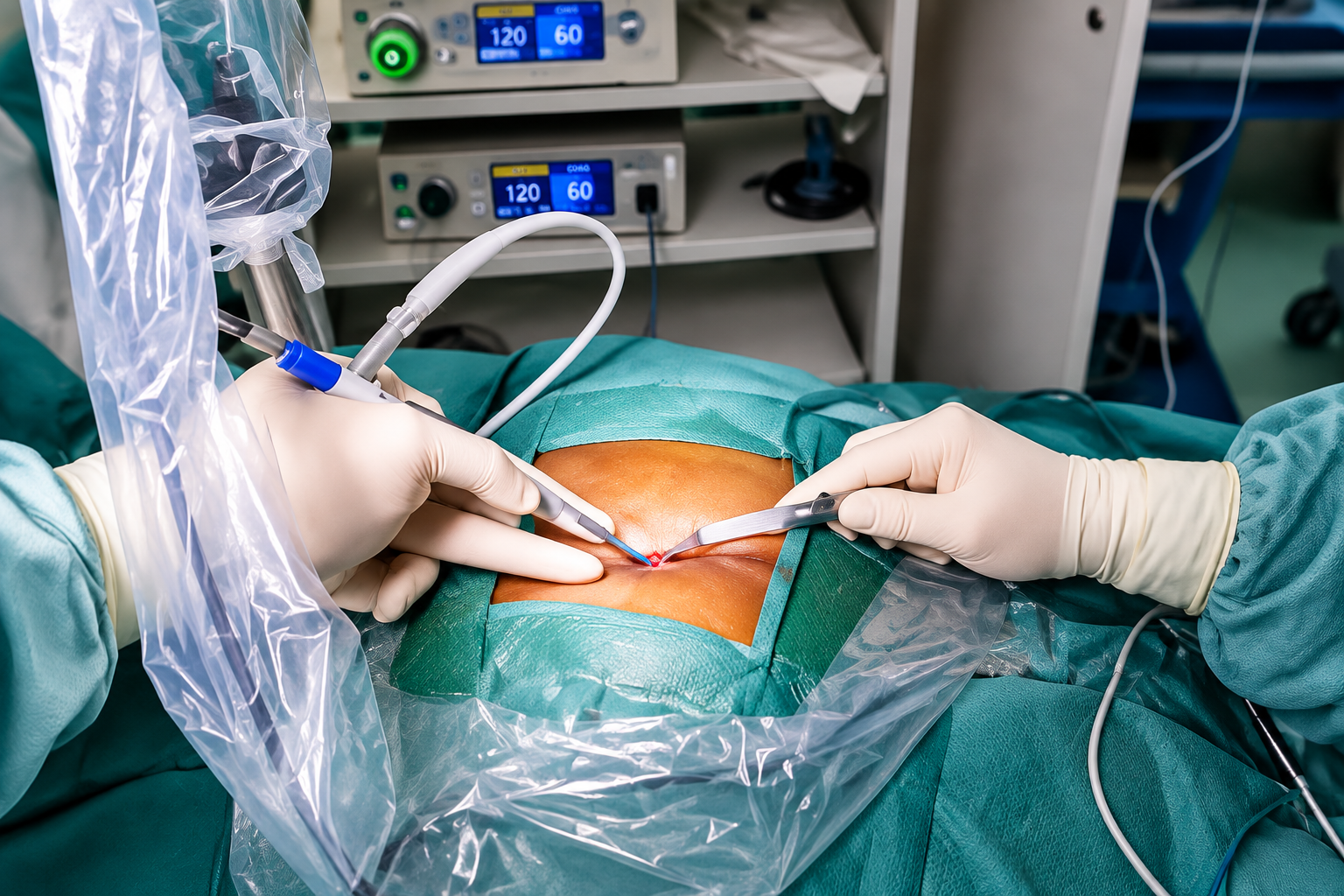
Surgical removal of the sinus tract is the most effective treatment for chronic or recurrent pilonidal disease. Depending on the condition, minimally invasive procedures or flap-based surgical techniques may be recommended. These procedures help reduce postoperative pain, promote faster wound healing, and lower recurrence rates.
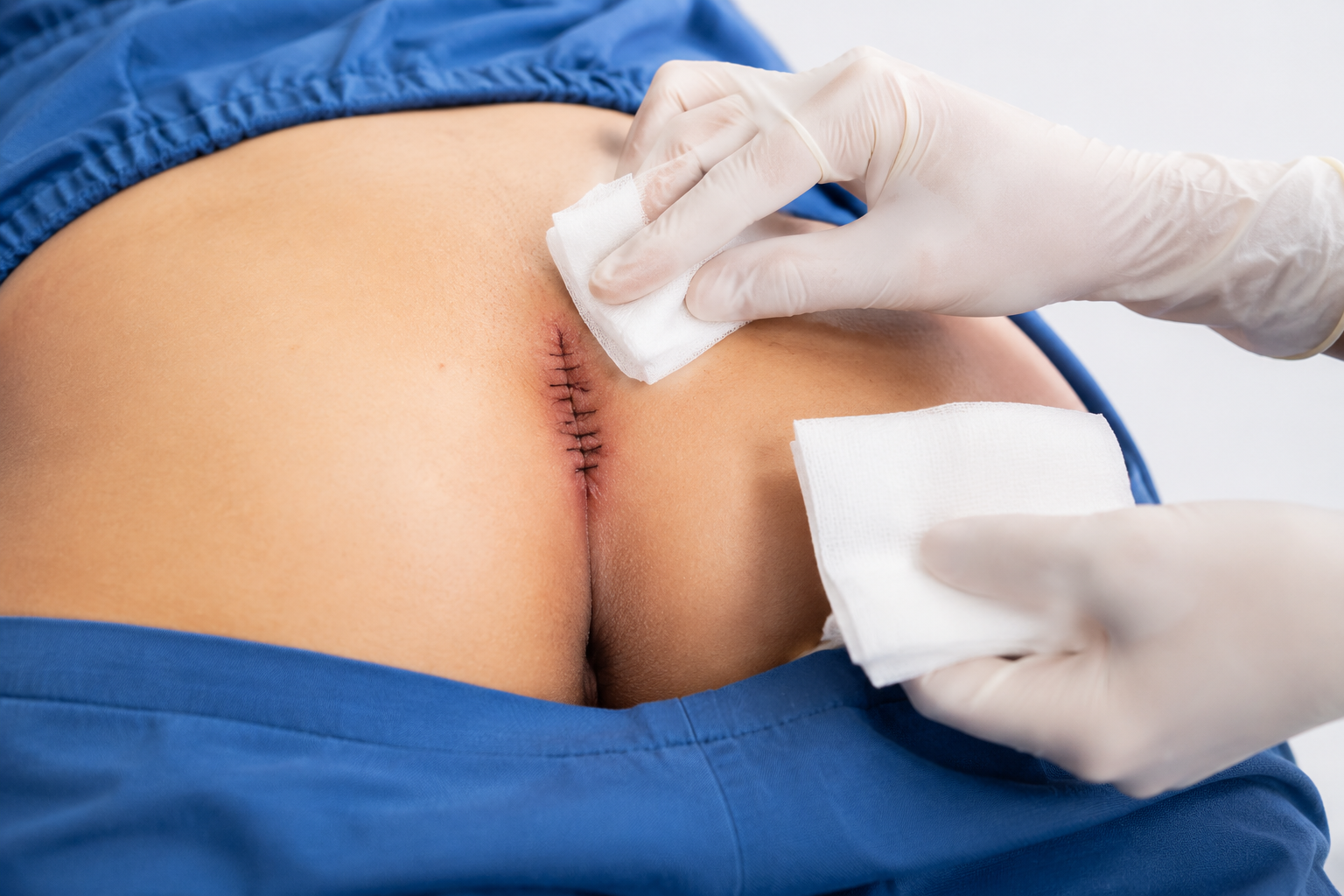
Wound Care & Recovery
Proper wound care after surgery is essential for complete healing. Patients receive detailed instructions on dressing changes, hygiene, hair removal, activity restrictions, and follow-up visits to ensure optimal recovery.
Long-Term Follow-Up Care
Regular follow-up appointments help monitor healing, detect early signs of recurrence, and provide preventive guidance to maintain long-term health and reduce future complications.