

Persistent Upper Abdominal Pain

Unexplained Weight Loss
Loss of Appetite
Jaundice (Yellowing of Skin & Eyes)
Abdominal Swelling
Fatigue and Weakness
Nausea and Vomiting
Feeling of Fullness After Small Meals
Liver Cirrhosis
Chronic Hepatitis B
Chronic Hepatitis C
Non-Alcoholic Fatty Liver Disease (NAFLD)
Excessive Alcohol Consumption
Diabetes
Obesity
Family History of Liver Cancer

Clinical Evaluation
Alpha-Fetoprotein (AFP) Blood Test
Liver Function Tests
Abdominal Ultrasound
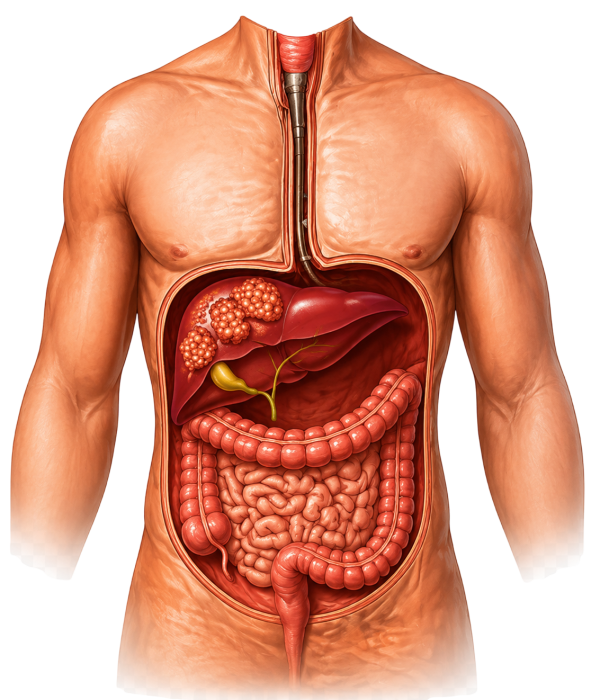
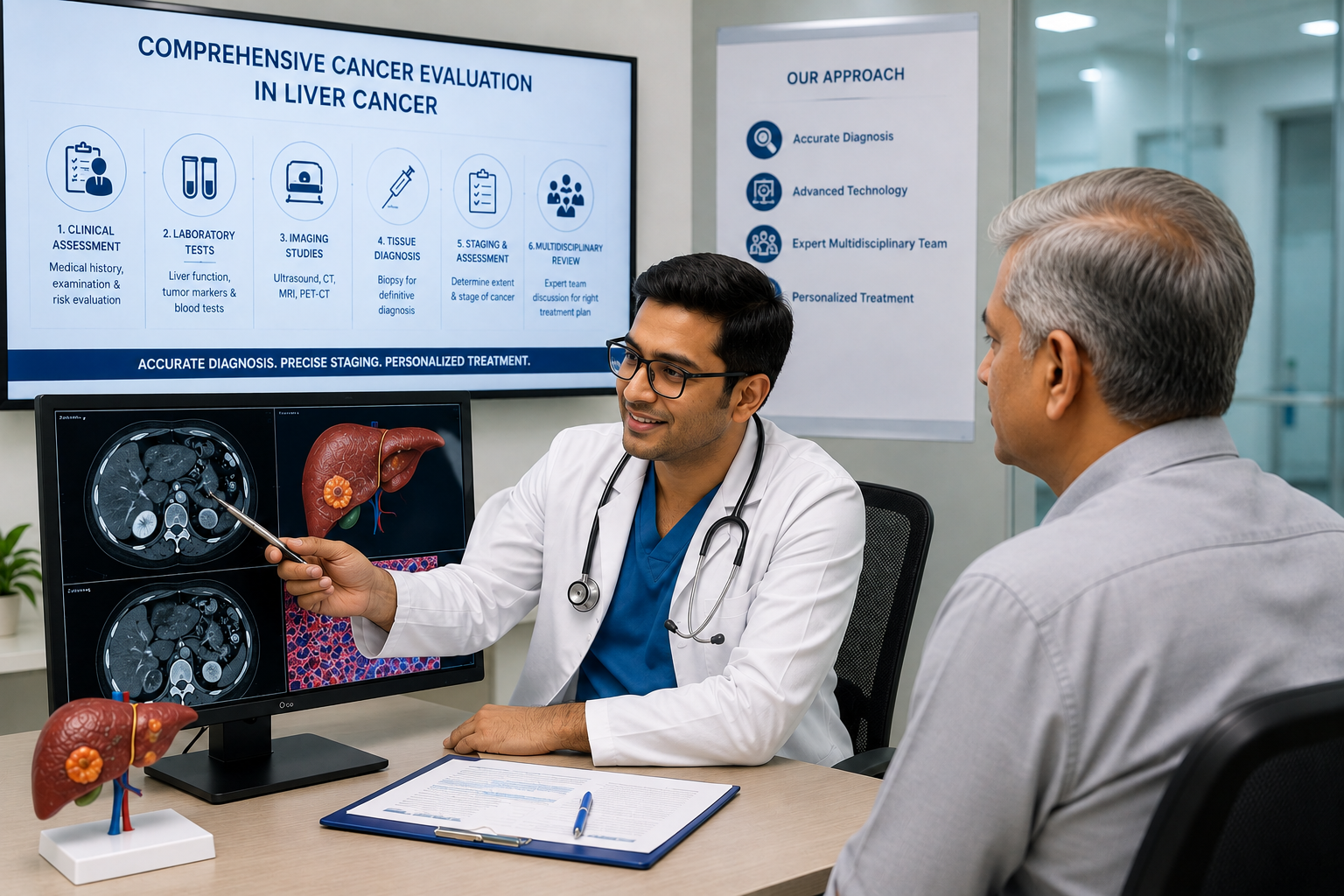
Comprehensive Cancer Evaluation
Every patient undergoes a detailed assessment, including imaging studies, liver function evaluation, biopsy findings (when required), and cancer staging. This comprehensive evaluation helps create an individualized treatment plan.

Minimally Invasive Liver Cancer Surgery
For patients with localized liver cancer, surgical removal of the tumor offers the best chance of cure. Whenever appropriate, minimally invasive laparoscopic liver surgery is performed to reduce postoperative pain, minimize blood loss, shorten hospital stay, and promote faster recovery.
Liver Tumor Ablation & Targeted Therapies
For selected patients who are not suitable for major surgery, treatments such as Radiofrequency Ablation (RFA), Microwave Ablation (MWA), or other targeted therapies may be recommended to destroy cancer cells while preserving healthy liver tissue.
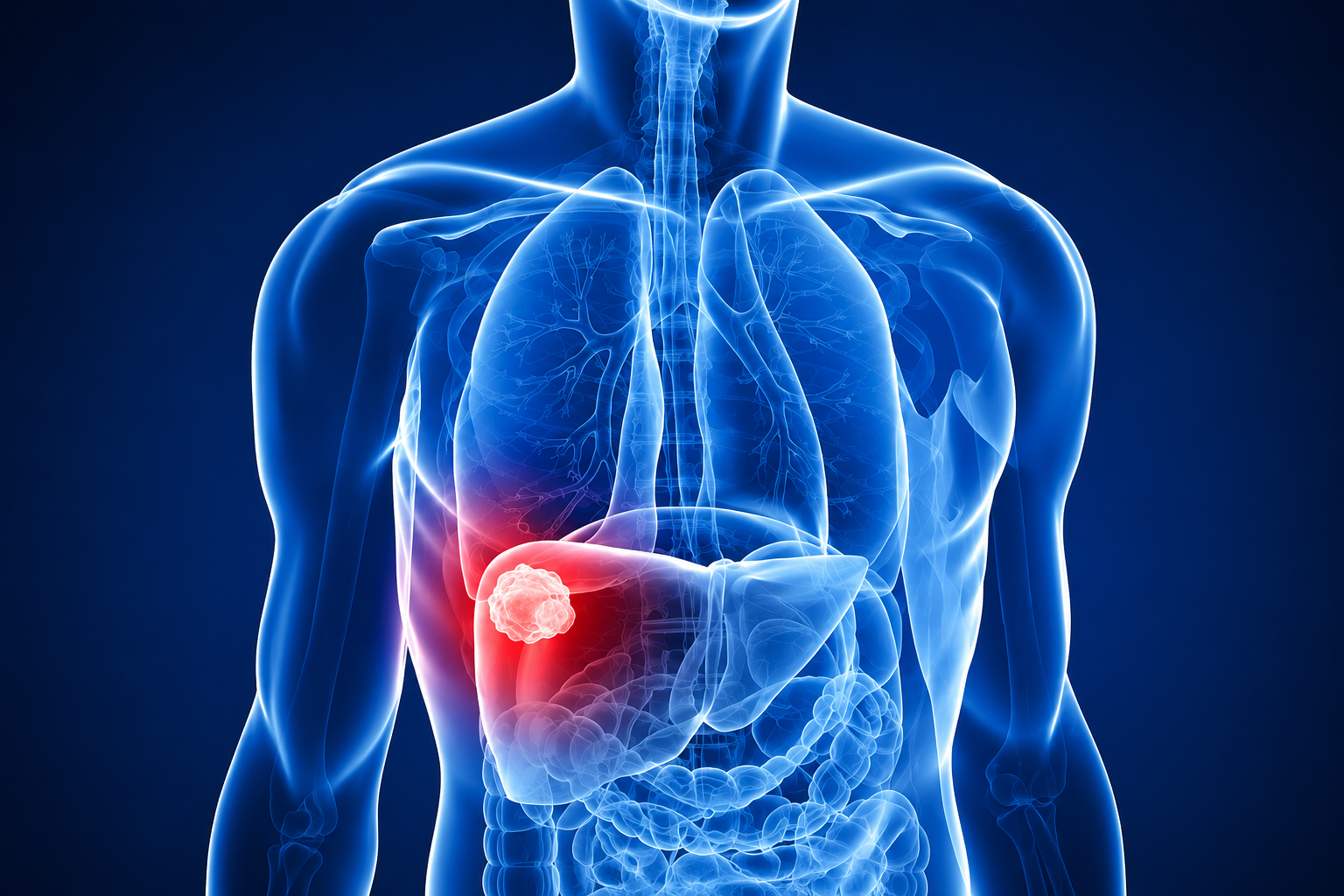
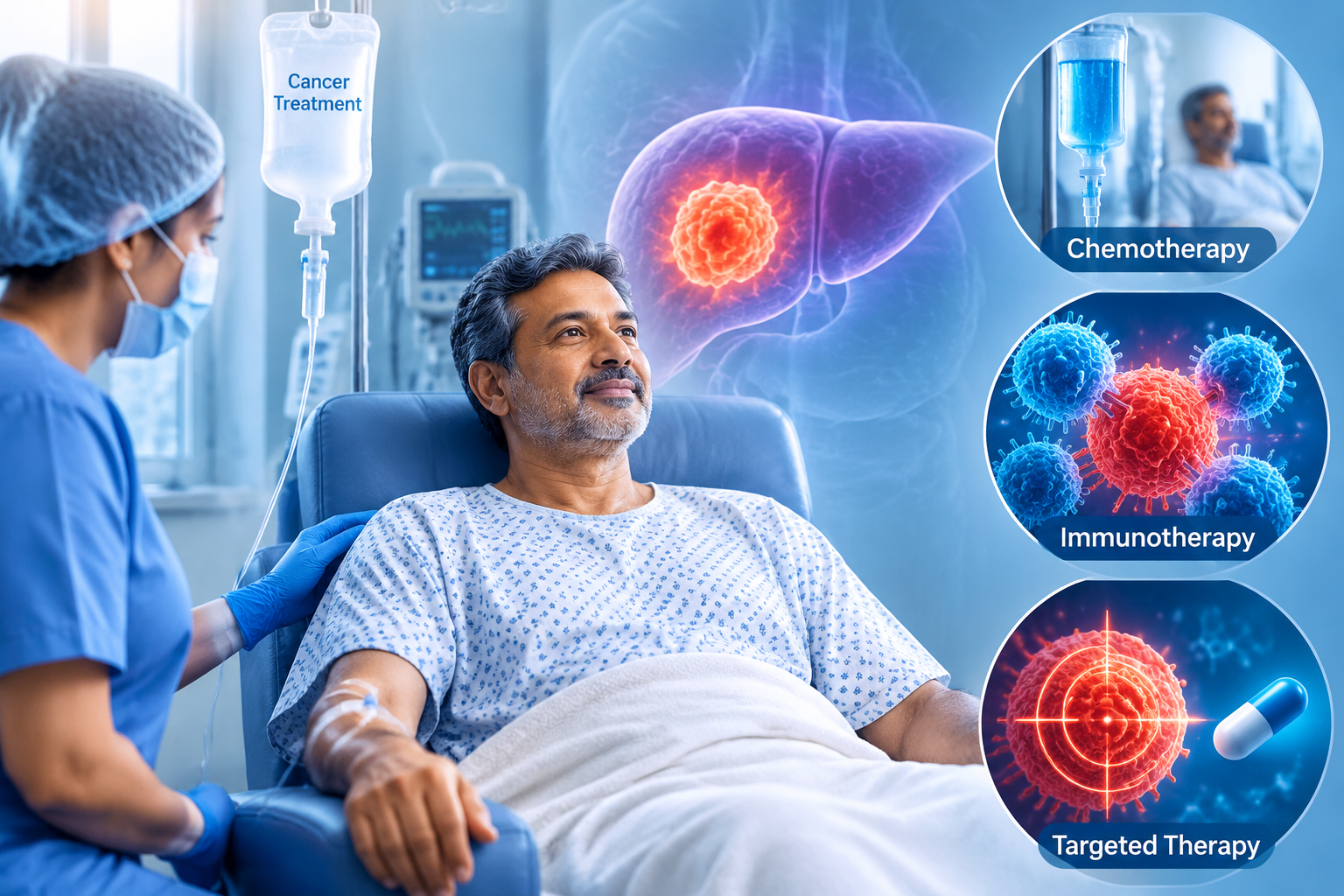
Chemotherapy, Immunotherapy & Targeted Therapy
Depending on the stage of the disease, systemic treatments including targeted therapy, immunotherapy, or chemotherapy may be recommended to control tumor growth, reduce recurrence, and improve survival outcomes.
Long-Term Cancer Follow-Up
Regular follow-up with liver imaging, AFP blood tests, liver function monitoring, and clinical evaluation is essential to detect recurrence early, monitor recovery, and maintain long-term liver health.