
Severe Pain in the Upper Right Abdomen

Pain After Eating Fatty Foods
Nausea and Vomiting
Pain Radiating to the Back or Right Shoulder
Indigestion and Bloating
Fever (If Infection Develops)
Jaundice (If Bile Duct Is Blocked)
Abdominal Tenderness
High Cholesterol Levels
Obesity
Rapid Weight Loss
Diabetes
Pregnancy
Family History
Increasing Age
High-Fat, Low-Fiber Diet

Clinical Evaluation
Liver Function Tests
Abdominal Ultrasound
Blood Investigations
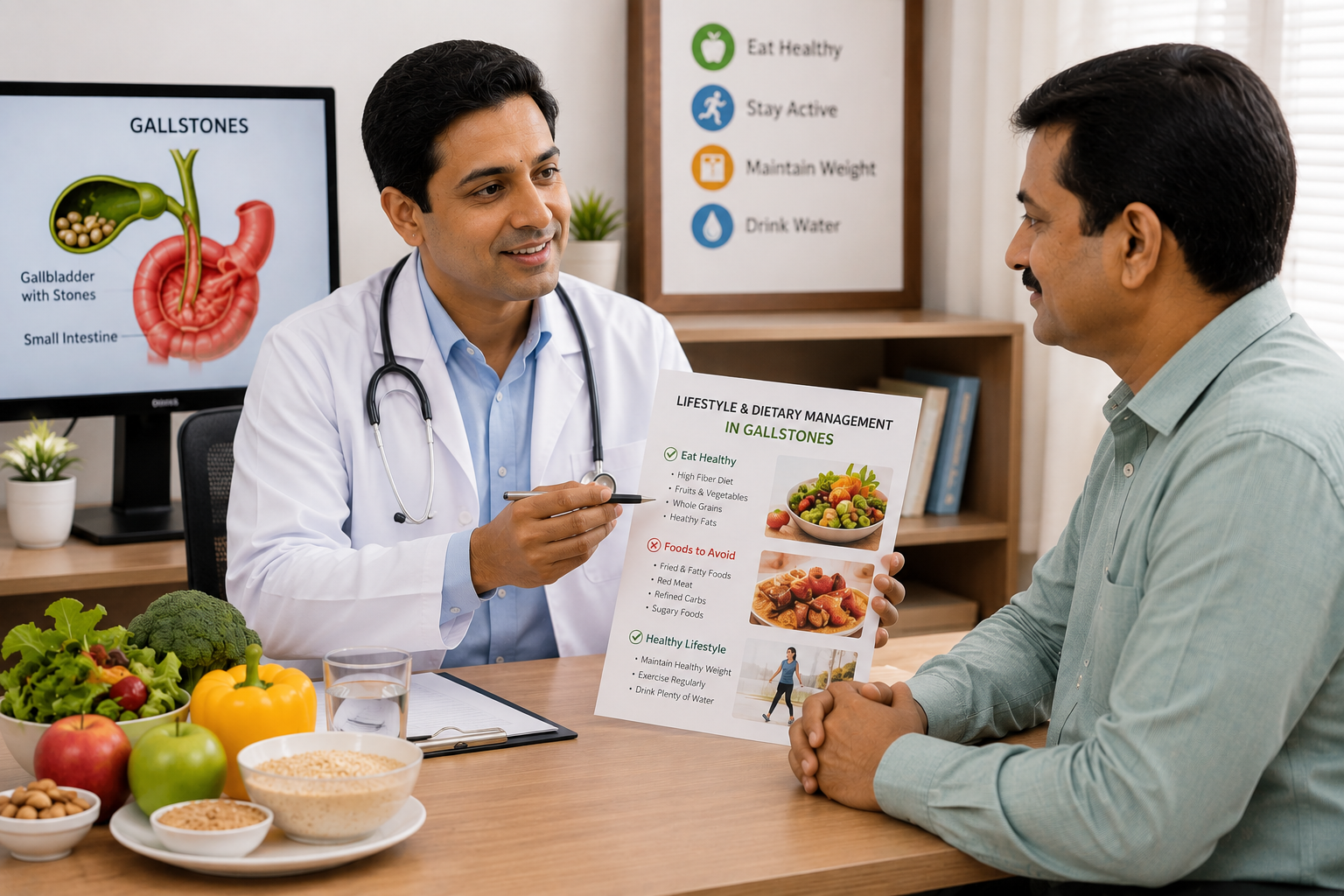
Lifestyle & Dietary Management
Patients with mild symptoms are advised to follow a low-fat diet, maintain a healthy weight, stay well-hydrated, and avoid foods that trigger gallbladder attacks. Lifestyle changes can help reduce symptoms but do not remove existing gallstones.
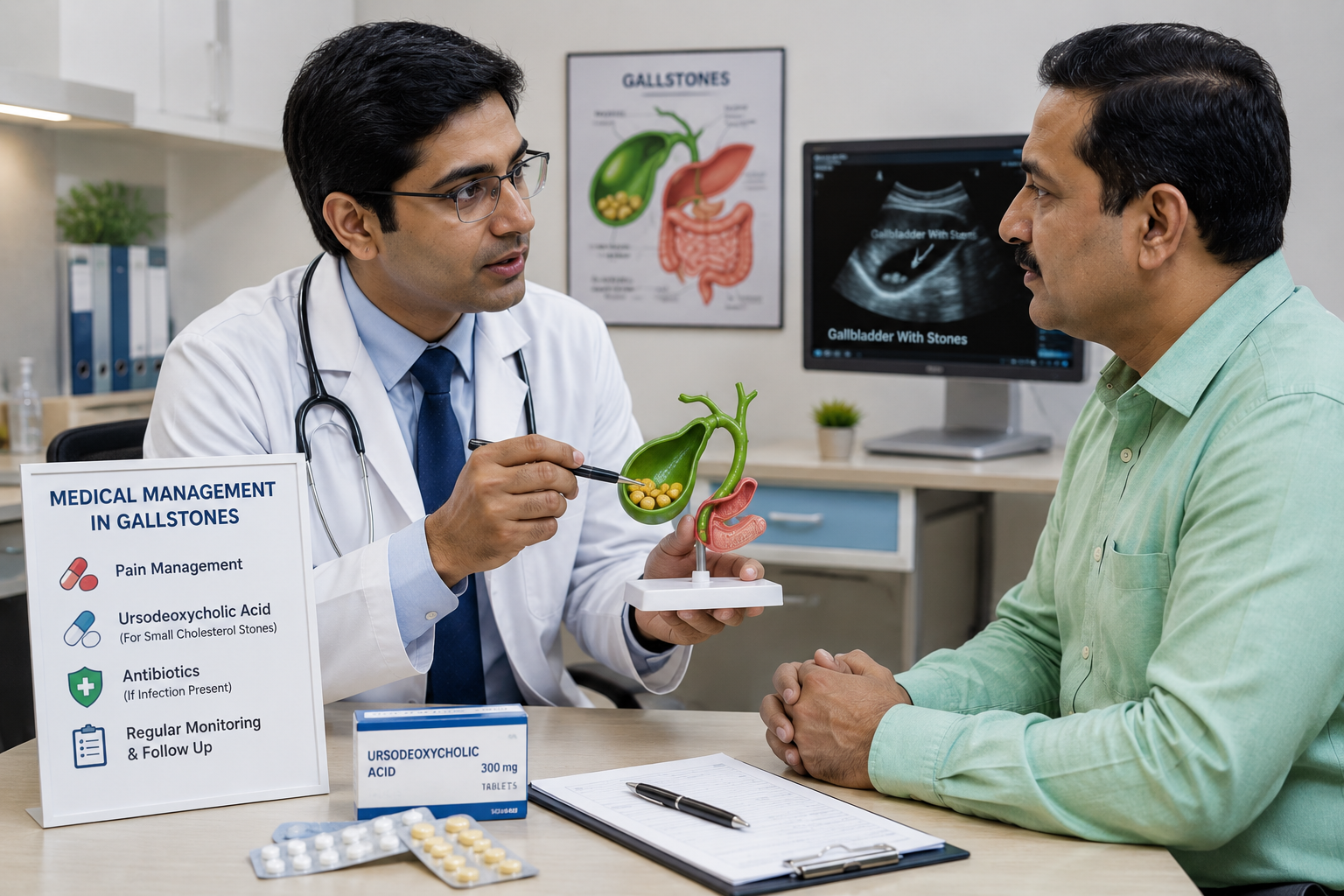
Medical Management
Medications may be prescribed to manage pain, reduce inflammation, and treat associated infections when necessary. In selected cases, medicines to dissolve gallstones may be considered, although they are suitable only for a small number of patients.
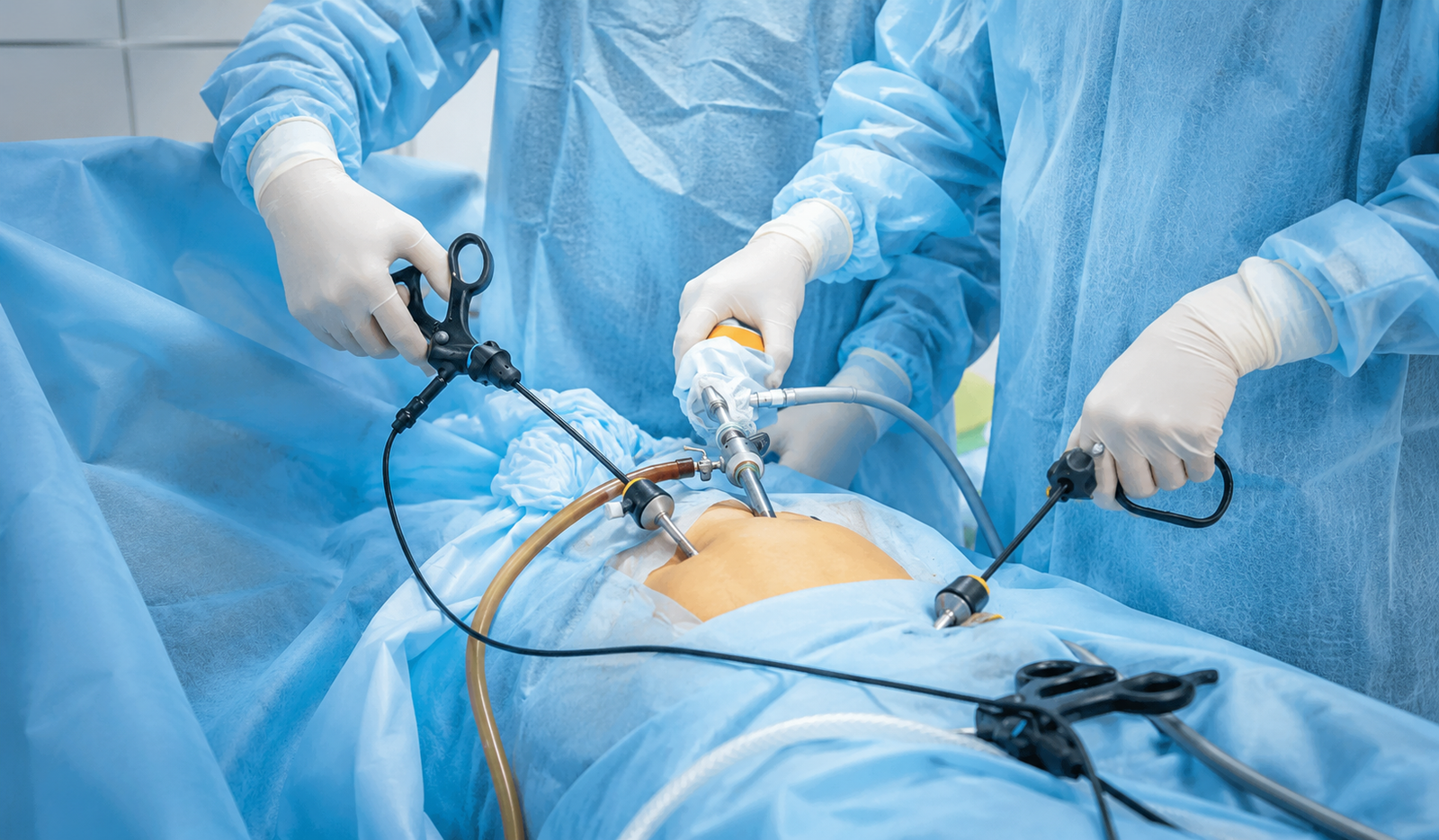
Laparoscopic Gallbladder Removal
Laparoscopic cholecystectomy is the gold-standard treatment for symptomatic gallstones. This minimally invasive procedure removes the gallbladder through small incisions, providing less pain, minimal scarring, shorter hospital stays, and a faster return to normal activities.
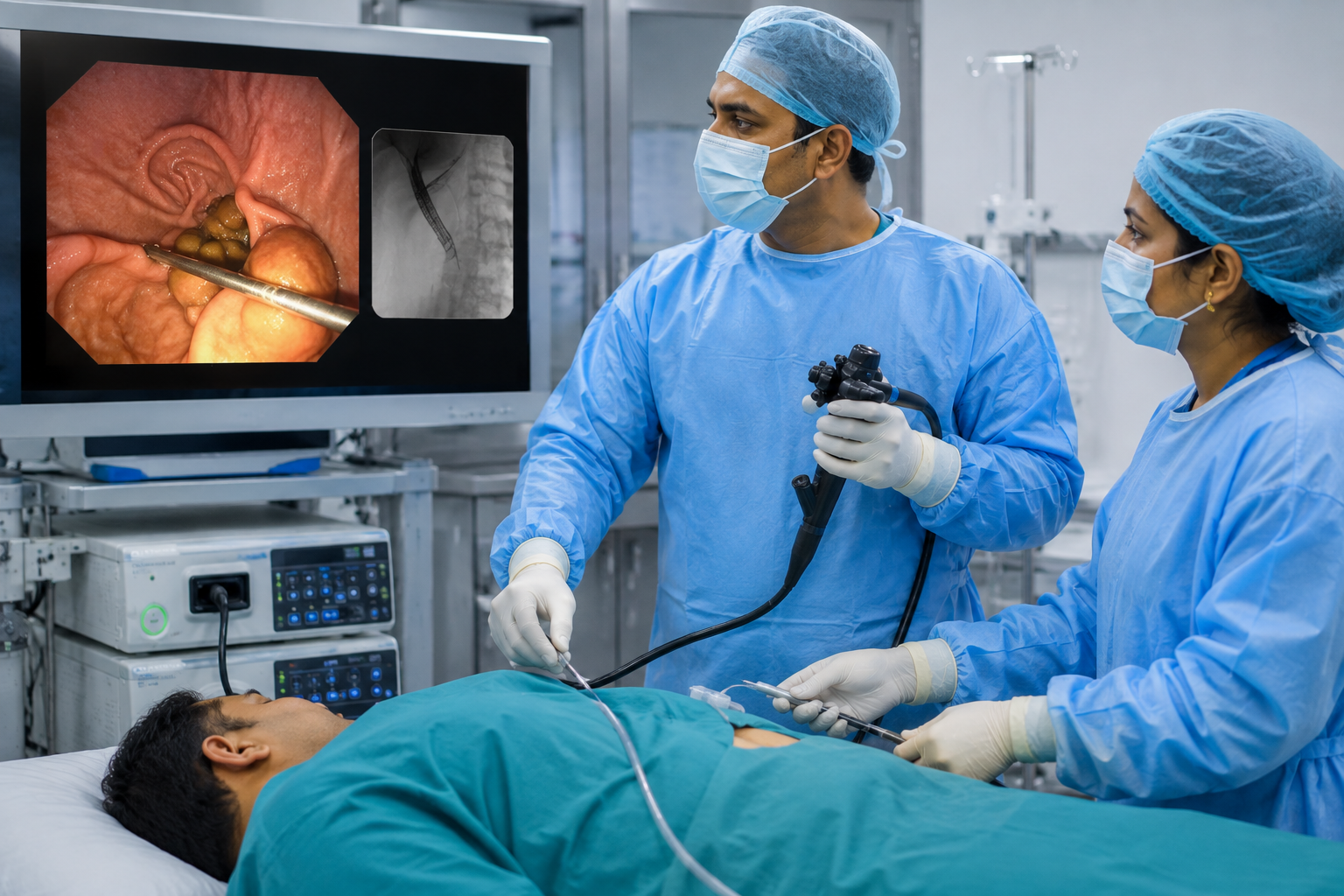
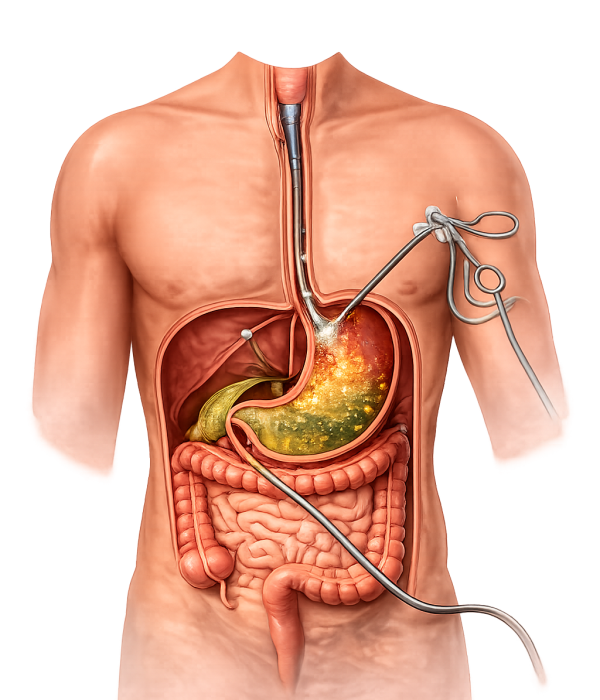
Treatment for Bile Duct Stones
If gallstones move into the bile duct, advanced procedures such as ERCP (Endoscopic Retrograde Cholangiopancreatography) may be required to remove the stones before or along with surgery.
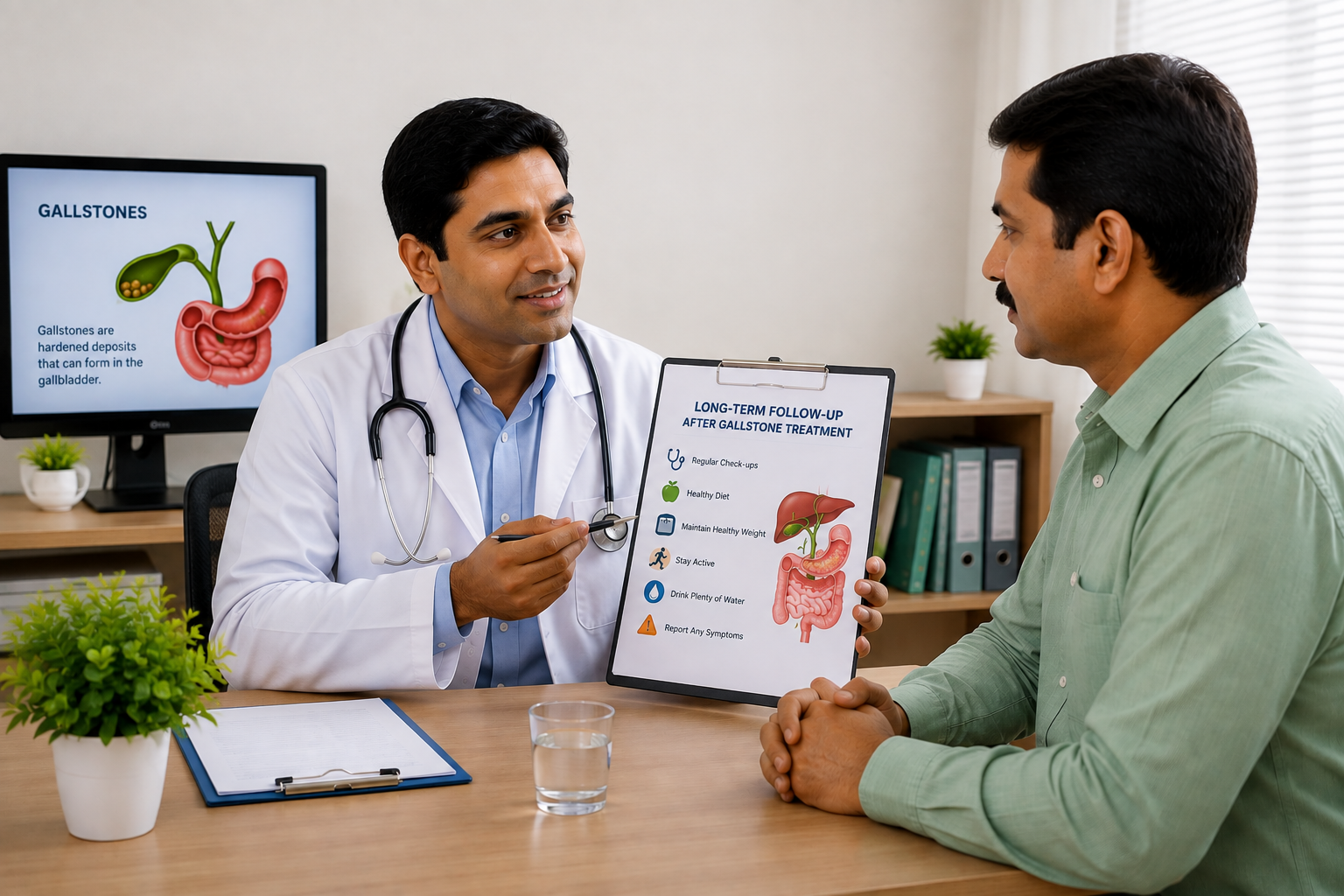
Long-Term Follow-Up
After treatment, regular follow-up ensures smooth recovery, proper wound healing, and guidance on diet and lifestyle to maintain long-term digestive health.