

Acute Appendicitis
Recurrent Appendicitis
Perforated Appendix
Chronic Appendicitis
Gangrenous Appendix
Appendicular Abscess
Smaller Incisions

Less Postoperative Pain
Minimal Blood Loss
Lower Risk of Wound Infection
Faster Recovery
Shorter Hospital Stay
Minimal Scarring
Early Return to Daily Activities

Preoperative Assessment
Before surgery, Dr. Prashanth Koyyoda performs a thorough clinical evaluation, including medical history, physical examination, blood investigations, ultrasound or CT scan when required, and anesthetic fitness assessment. These investigations help confirm the diagnosis and determine the urgency of surgery.


General Anesthesia
Laparoscopic appendectomy is performed under general anesthesia to ensure complete patient comfort throughout the procedure. The anesthesia team continuously monitors all vital signs to maintain maximum safety.
Surgical Procedure
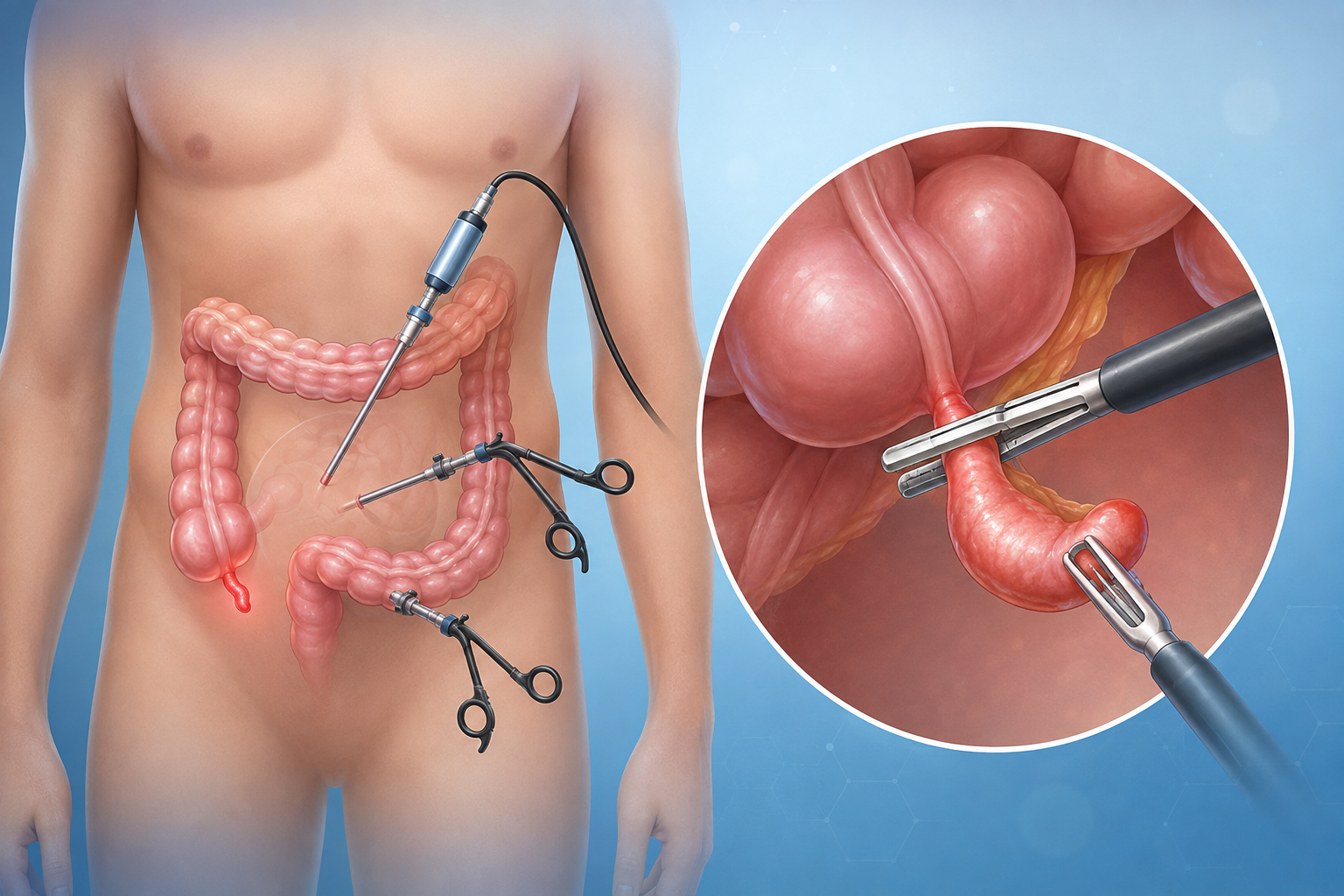
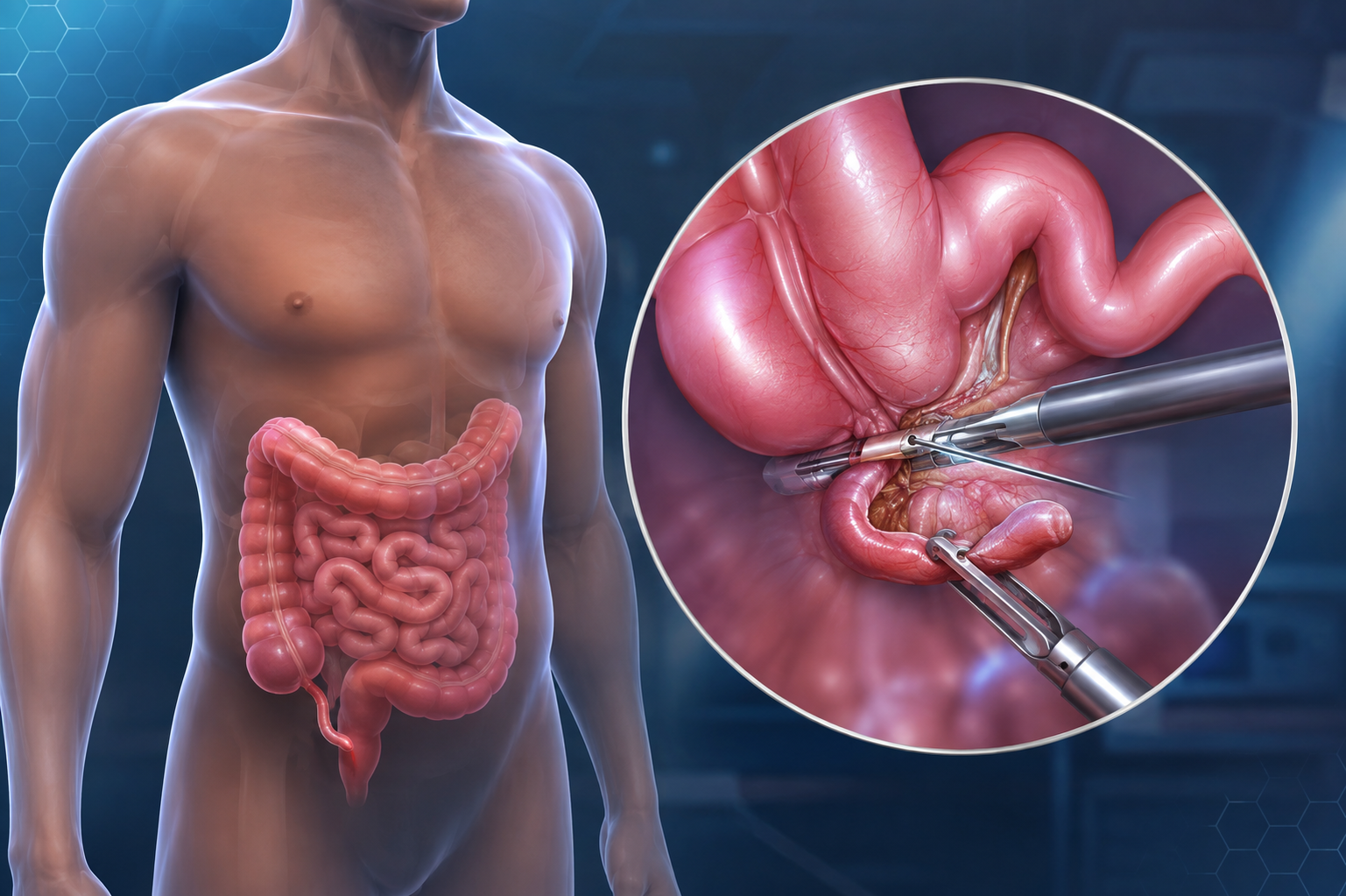
Three small incisions are made in the abdomen to insert a high-definition laparoscope and specialized surgical instruments. The inflamed appendix is carefully identified, separated from the surrounding tissues, and removed safely. The base of the appendix is securely sealed before removal to prevent leakage or infection. If infection or pus is present, the abdominal cavity is thoroughly cleaned before completing the procedure.
Appendix Removal
Once detached, the appendix is placed inside a sterile retrieval bag and removed through one of the small incisions. The surgical area is inspected to ensure there is no bleeding or contamination before the incisions are closed.
Postoperative Care
After surgery, patients are monitored for pain control, recovery from anesthesia, bowel function, and wound healing. Early walking is encouraged to reduce complications, and most patients can resume oral intake within a few hours after surgery.